
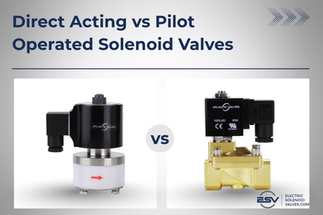
Posted by Electric Solenoid Valves on May 5th 2026
Direct Acting vs. Pilot Operated Solenoid Valve: How to Choose the Right Type
Direct-Acting vs Pilot-Operated Solenoid Valves: Which Valve Is Right for Your Application?
Not all solenoid valves work the same way—choosing the wrong type can cause leaks or failures. Two valves may look identical on paper, but their operating design makes all the difference.
Some valves open directly using the force of the solenoid coil (direct‑acting). Others rely on system pressure to help move the internal seal (pilot‑operated). That difference determines whether the valve can work at zero pressure, low pressure, or only when enough differential pressure is available.
This guide explains how each type works, why minimum pressure matters, and how to choose the right valve for your system.
Difference Between a Direct-Acting and Pilot-Operated Solenoid Valve
 |
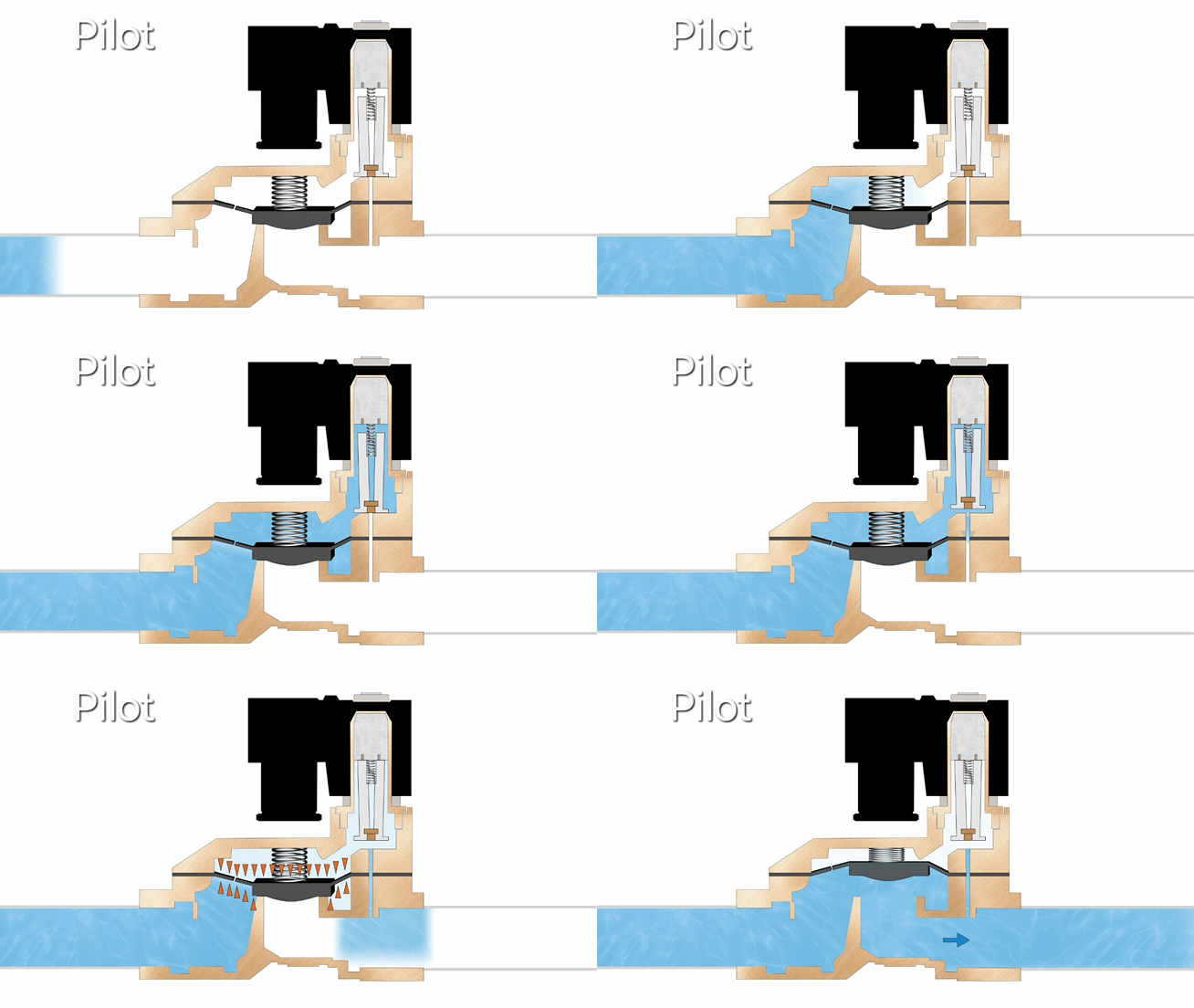 |
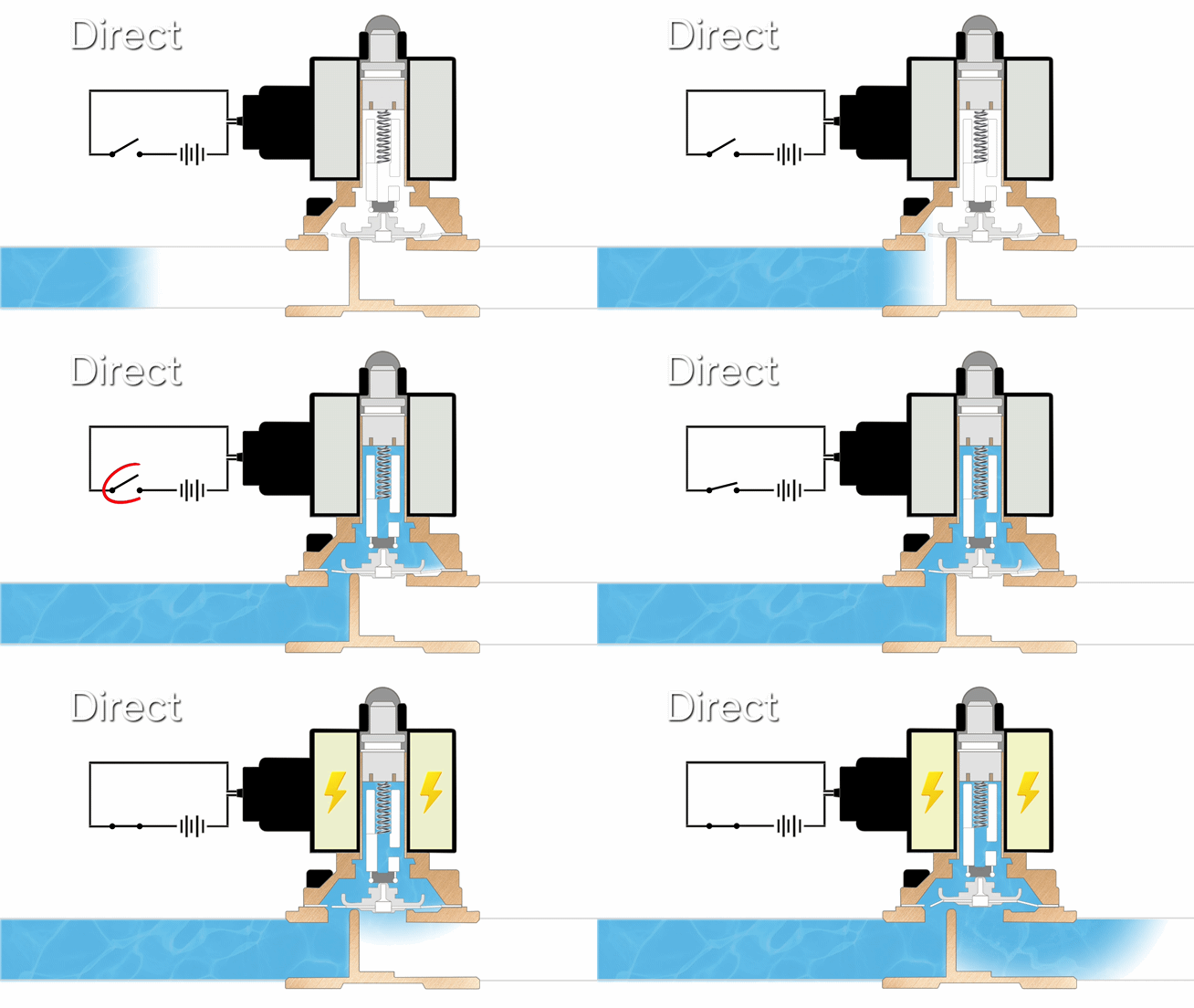
A direct-acting solenoid valve uses the magnetic force of the coil to open or close the valve directly. A pilot-operated solenoid valve uses system pressure to help move the main seal or diaphragm.
In practical terms, direct-acting valves are often better for low-pressure or zero-differential applications. Pilot-operated valves are often better for systems with stable line pressure and higher flow requirements.
That short answer covers the main distinction, but the buying decision depends on more than that. Pressure conditions, media, flow needs, fail state, and installation environment all matter.
Why Minimum Pressure Matters First
Before comparing valve types in detail, start with the most important filter: pressure.
What Minimum Pressure Means
Minimum pressure is the lowest pressure, or in many cases the lowest pressure difference across the valve, needed for the valve to operate correctly.
For many pilot-operated valves, this is a hard requirement. If the system cannot provide enough pressure assistance, the valve may not open fully, may not shift reliably, or may not operate at all.
What Differential Pressure Means
Differential pressure simply means the difference between the inlet and outlet sides of the valve. Pilot‑operated valves need this difference to lift the diaphragm or main seal. If the pressure gap is too small, the valve may energize but still fail to open.
Why This Causes Selection Mistakes
This is one of the most common errors in valve selection.
A buyer checks the voltage, thread size, and body material, then installs the valve on a gravity-fed system, a tank discharge line, or a low-head liquid setup. The valve may seem technically compatible, but the application never provides the pressure support it needs.
If the system starts at zero pressure, runs at low pressure, or sees pressure fluctuations, pressure requirements should be the first decision point, not something checked at the end.
What Is a Direct-Acting Solenoid Valve?
A direct-acting solenoid valve opens and closes because the solenoid coil directly moves the plunger or sealing element. When the coil energizes, the magnetic field lifts or shifts the internal component off the seat. When power is removed, a spring returns the valve to its normal position.
Why Direct-Acting Valves Are Used in Low-Pressure Systems
Because the coil is doing the opening work directly, a direct-acting valve is commonly used where pressure is low, inconsistent, or absent.
This is why buyers often look for a low-pressure solenoid valve or a zero-differential-capable design when dealing with gravity feed, tank discharge, dosing, dispensing, or intermittent shutoff.
Typical Strengths of Direct-Acting Valves
Direct-acting valves are often a strong choice when you need:
- A reliable opening at low or zero pressure
- dependable operation in gravity-fed or tank-fed systems
- intermittent control for dosing or dispensing
- simpler selection where pressure assistance cannot be guaranteed
They are often the safer option when system pressure is limited or uncertain.
Typical Tradeoffs of Direct-Acting Valves
The tradeoff is usually flow capacity.
Direct-acting designs often have smaller orifices and may offer lower flow for a given body size than pressure-assisted alternatives. That does not make them inferior. It just means they are selected for pressure independence first, then matched to the required flow.
What Is a Pilot-Operated Solenoid Valve?
A pilot-operated solenoid valve does not usually lift the full main seal directly. Instead, the coil opens a small pilot passage, and system pressure helps move the main diaphragm or piston.
Why Pilot-Operated Valves Often Need Pressure
A pilot-operated valve uses line pressure as part of its operating mechanism. That is why many pilot-operated models require a minimum inlet pressure or a minimum differential pressure.
If the pressure relationship is not there, the main valve may not shift properly.
Where Pilot-Operated Valves Make Sense
Pilot-operated valves are commonly used in:
- stable pressurized water lines
- compressed air systems
- industrial utility lines
- irrigation systems with a dependable supply pressure
- applications needing higher flow in a compact electric valve format
When line pressure is stable and clearly above the required minimum, pilot-operated designs can be efficient and practical.
Typical Strengths of Pilot-Operated Valves
Pilot-operated valves are often chosen because they can offer:
- Higher flow capacity for a given valve size
- better suitability for larger line sizes
- efficient operation in stable pressure systems
- broad usefulness in general industrial water and air control
Typical Tradeoffs of Pilot-Operated Valves
The main limitation is the pressure requirement.
Pilot-operated valves can be a poor fit for zero-pressure systems, weak gravity feed, low-head tank discharge, or any application where line pressure is inconsistent. If the system cannot guarantee enough pressure, this is where field problems begin.
Direct-Acting vs. Pilot-Operated Solenoid Valve Comparison
Here is the practical side-by-side view most buyers need.
| Factor | Direct-Acting Solenoid Valve | Pilot-Operated Solenoid Valve |
|---|---|---|
| Operating principle | Coil directly lifts or shifts the sealing element | Coil opens a pilot passage, and system pressure helps move the main seal |
| Pressure requirement | Often suitable for low pressure or zero differential pressure, depending on the model | Usually needs a minimum inlet or differential pressure |
| Low-pressure performance | Better fit for low-pressure and zero-pressure conditions | Often unsuitable if pressure is weak or unstable |
| Flow capacity | Usually lower for a given size | Usually higher for a given size |
| Best application fit | Tank-fed, gravity-fed, dosing, low-flow shutoff, intermittent control | Stable pressurized systems, higher flow demand, and general utility lines |
| Common selection risk | Undersizing for the required flow | Choosing it for a system with insufficient pressure |
| Typical buyer priority | Reliable actuation at low pressure | Higher flow with stable line pressure |
This is the real decision framework. If pressure availability is the problem, direct-acting is usually the better starting point. If flow demand is higher and line pressure is dependable, pilot-operated may be the better fit.
When a Direct-Acting Valve Is Usually the Better Choice
A direct-acting valve is often the better choice when the application cannot guarantee stable pressure across the valve.
Gravity-Fed Water Systems
Gravity-fed systems often run at low head pressure and may not provide the differential pressure a pilot-operated design needs.
Better fit: Direct-acting
Why: The valve must open reliably even when pressure is low or close to zero.
Tank Discharge Systems
Tank level affects pressure. As the liquid level drops, available pressure may drop with it.
Better fit: Direct-acting
Why: Pressure changes over time, which can make pilot operation unreliable.
Low-Pressure Liquid Control and Dosing
For light dosing, dispensing, or intermittent low-flow control, dependable opening matters more than maximum flow.
Better fit: Direct-acting
Why: The application often needs reliable actuation at low pressure, not higher flow at stable pressure.
Start-Up and Fluctuating Pressure Conditions
Some systems may eventually build pressure, but startup conditions begin near zero, or pressure varies during operation.
Better fit: Direct-acting
Why: Direct actuation reduces dependence on pressure conditions that may not be consistent.
When a Pilot-Operated Valve Is Usually the Better Choice
A pilot-operated valve is often the better choice when the system already has the pressure support it needs and the application benefits from higher flow capacity.
Stable Industrial Water Control
In a steady pressurized water line, pilot-operated valves can provide efficient control without requiring the coil to do all the mechanical work directly.
Better fit: Pilot-operated
Why: Stable pressure makes pressure-assisted opening practical.
Compressed Air Lines
Compressed air systems often provide the stable line pressure needed for pilot-assisted operation.
Better fit: Pilot-operated, in many cases
Why: The pressure support is already available, and higher flow may be useful.
Irrigation or Utility Lines With Dependable Pressure
In pump-fed or municipal-fed systems with consistent pressure, pilot-operated designs can be a strong option.
Better fit: Pilot-operated
Why: The application can support the minimum pressure requirement, and flow demand may be higher.
Larger Port and Flow Requirements
As applications scale up, buyers often move toward pilot-assisted designs because the required flow increases faster than the practicality of a purely direct-acting mechanism.
Better fit: Pilot-operated
Why: Higher flow capacity is often the deciding factor once pressure is no longer the limitation.
How to Choose the Right Type
Use this sequence instead of guessing from product names alone.
1. Confirm Actual Inlet Pressure
Check the pressure the valve will really see, not the ideal pressure on a system drawing. Startup, low tank level, and intermittent operation can all reduce available pressure.
2. Confirm Whether Enough Differential Pressure Exists
Ask whether the outlet conditions still leave enough pressure difference across the valve. This step is critical for any pilot-operated valve.
3. Check the Media
Confirm the valve is rated for the actual media, not just for “liquid” or “gas” in general. Media compatibility with body and seal materials still matters.
4. Match Valve Size to Required Flow
Do not assume a larger valve is automatically better. The right choice depends on the required flow, pressure conditions, and how the valve is expected to operate.
5. Confirm Voltage and Coil Setup
Verify AC or DC voltage, connector style, and duty expectations. A mechanically correct valve can still be the wrong choice if the electrical setup does not match the installation.
6. Check Temperature Limits
Review both media temperature and ambient conditions. Hot media, outdoor exposure, or wide ambient swings can narrow the suitable options.
7. Confirm Normal Position
Make sure the fail state is correct.
A Normally Closed Solenoid Valve remains closed without power. A Normally Open Solenoid Valve remains open without power. This choice should be made alongside pressure, media, and application requirements, not after them.
8. Check Duty Cycle and Installation Conditions
Frequent cycling, continuous energization, and outdoor installation can all affect the best choice. Coil duty rating, enclosure protection, and environment should be part of the selection process.
Common Mistakes to Avoid
Choosing a Pilot-Operated Valve for a Zero-Pressure System
This is the most common selection mistake on this topic. If the valve depends on pressure assistance and your system cannot provide it, the valve may not work as expected.
Ignoring the Minimum Pressure Line on the Datasheet
That small line in the spec is often the difference between a successful install and a wasted order.
Assuming Bigger Valves Are Always Better
Oversizing can add cost and complexity without solving the real problem. Pressure conditions and actual flow requirements should drive selection.
Not Checking Media Compatibility
Even if the operating principle is correct, the valve can still be wrong for the fluid or gas being used.
Overlooking the Fail State
Normally closed versus normally open is not a minor detail. It changes what happens during power loss and normal operation.
Treating All Zero-Pressure-Capable Valves as Identical
They are not. Even when a valve is suited to low-pressure or zero-differential conditions, exact performance still depends on valve design, media, temperature, and application details. Always check the product datasheet.
A Quick Note on Semi-Direct Acting Valves
This article is focused on direct-acting versus pilot-operated selection, but there is one important nuance. Some valves use a hybrid, or semi-direct, design that combines traits of both.
In some applications, that hybrid approach can support no-pressure operation while still handling stronger flow demands than a purely direct-acting design. That does not replace the main comparison in this guide, but it is worth noting because some buyers may encounter this category while comparing products.
Final Thoughts
When comparing a direct-acting vs. pilot-operated solenoid valve, the right choice comes down to pressure conditions first, then flow requirements, media, fail state, and installation details.
Direct-acting valves are often the better fit for low-pressure, zero-differential, gravity-fed, tank-fed, and intermittent control systems. Pilot-operated valves are often the better fit for systems with stable line pressure and higher flow requirements.
The key is not to assume all solenoid valves work the same way. Before buying, confirm the
- Actual pressure available at the valve
- Differential pressure across it
- Media compatibility
- Normal position
- Exact datasheet limits for the model you are considering.
From there, refine your selection based on pressure requirements and the specific demands of your application. For a deeper understanding, explore our Normally Open Solenoid Valve Guide, and consider low-pressure or direct-acting valve options where system pressure is limited.
FAQs
What is the main difference between a direct-acting and pilot-operated solenoid valve?
A direct-acting valve opens directly using the force of the solenoid coil. A pilot-operated valve uses system pressure to help move the main sealing element, which is why many pilot-operated designs require a minimum differential pressure.
Do pilot-operated solenoid valves need pressure?
Many do. A pilot-operated valve usually needs enough inlet or differential pressure to let the pressure-assisted mechanism open the main valve correctly. Always confirm the exact requirement on the datasheet.
Can a solenoid valve work at zero pressure?
Some can, but not all. Direct-acting and some semi-direct designs can operate at zero or near-zero differential pressure, while many pilot-operated valves cannot.
When should I use a low-pressure solenoid valve?
Use a low-pressure solenoid valve when the system has weak pressure, little differential pressure, or near-zero starting pressure, such as some gravity-fed, tank-discharge, or low-pressure control setups.
Is a bigger pilot-operated valve always better than a smaller direct-acting valve?
No. Bigger is not automatically better. The correct choice depends on actual flow needs, available pressure, media, and how the valve must behave in the real system.
How do I choose between normally closed and normally open?
Choose based on what should happen when power is off. Normally closed valves stay shut until energized. Normally open valves stay open until energized.
Questions? We’re Here to Help
The right solenoid valve choice comes down to pressure conditions first, then flow needs, media, and installation details. Direct‑acting valves are usually better for low‑pressure or zero‑pressure systems, while pilot‑operated valves fit stable, pressurized lines with higher flow demand.
If you’re unsure which type is right for your application, don’t guess—reach out to us anytime.
Call us at 800‑983‑8230 Monday - Friday from 9:00 AM to 5:00 PM EST or email us at sales@electricsolenoidvalves.com.