
Posted by Electric Solenoid Valves on Apr 21st 2026
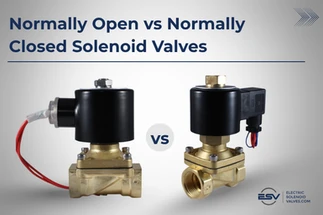
Normally Open vs Normally Closed Solenoid Valves
Normally Open vs Normally Closed Solenoid Valves: Which One Should You Choose?
Choosing between a normally open vs normally closed solenoid valve starts with one question: what should happen when power is removed?
That default state affects safety, shutoff logic, coil energizing time, and overall application fit. A normally closed valve stays closed with no power and opens when energized. A normally open valve stays open with no power and closes when energized.
For most systems, the right choice is not about which design sounds better. It is about matching the valve’s default position to the safe and practical behavior you want when the system is de-energized.
What Changes When Power Is Removed?
The default valve position is the valve’s state when no electrical power is applied to the coil.
- Normally closed, NC: The valve is closed with no power
- Normally open, NO: The valve is open with no power
This matters because many selection mistakes happen when buyers focus only on what the valve does when energized, instead of what it does when power is lost, intentionally shut off, or interrupted during a fault.
If the de-energized state creates the wrong result, the valve is the wrong fit, even if it behaves correctly during normal operation.
Normally Open vs Normally Closed Solenoid Valves at a Glance
| Feature | Normally Closed Solenoid Valve | Normally Open Solenoid Valve |
|---|---|---|
| Default position | Closed | Open |
| When energized | Opens | Closes |
| Power-loss behavior | Stops flow | Allows flow |
| Best fit | Shutoff by default | Flow by default |
| Often used when the valve spends most of the time | Closed | Open |
| Typical use case | Water shutoff, timed flow, leak prevention | Cooling loops, bypass lines, fail-open systems |
At the simplest level, choosing between normally open and normally closed solenoid valves is a decision about what the valve should do when the system is not actively powering it.
The Real Decision Point: Fail Open or Fail Closed
For most buyers, the real question is simple:
If power is lost, should flow stop or continue?
That is the fail-state decision.
- Choose a normally closed solenoid valve if the safer result is to stop flow
- Choose a normally open solenoid valve if the safer result is to keep the flow moving
This is the clearest way to choose between NO and NC configurations. It also helps avoid one of the most common mistakes: selecting a valve based only on the energized state instead of the de-energized state.
If you remember one rule from this guide, make it this one: choose the valve based on the condition you want when power is off.
Do Not Confuse Valve State with Valve Operating Method
This is a separate decision.
Normally open and normally closed describe the valve’s default position.
Direct-acting and pilot-operated describe how the valve actuates internally.
That means these are not interchangeable terms:
- NO vs NC = default state
- Direct-acting vs pilot-operated = operating method
In real valve selection, you may need to choose both:
- The correct default position
- The correct actuation method for your pressure and flow conditions
A valve can be normally closed and direct-acting. Another can be normally open and pilot-operated. These are separate characteristics, and confusing them can lead to the wrong purchase.
When a Normally Closed Solenoid Valve Is Usually the Better Fit
A normally closed solenoid valve is usually the better choice when flow should remain off until the system actively allows it.
This is often the safer and more common option for shutoff applications because the valve closes when power is removed. In many systems, that default-off behavior is exactly what the application requires.
Common reasons to choose NC:
- You want fluid flow to stop during a power failure
- The line should stay shut unless a controller opens it
- You are building a timed shutoff or on-demand flow system
- The application prioritizes default-off behavior
- You want the valve to open only when the system commands it
Typical NC applications include irrigation shutoff, leak prevention systems, dispensing lines, machine water control, gas or air shutoff functions, and washdown or cleaning cycles with controlled flow timing.
In many water and utility systems, NC is the safer default because it helps prevent unintended flow if the coil loses power.
When a Normally Open Solenoid Valve Is Usually the Better Fit
A normally open solenoid valve is usually the better choice when the system should allow flow under normal no-power conditions and only close when energized.
This makes sense in applications where flow must continue most of the time, or where a fail-open condition is more important than default shutoff.
Common reasons to choose NO:
- You want the flow to continue during a power outage
- The valve needs to stay open most of the time
- The application only occasionally needs to stop the flow
- Your design requires a fail-open condition
- You want the valve to close only when the controller sends a signal
Typical NO applications include cooling water circulation, bypass lines, drain or vent functions, recirculation systems, and systems where maintaining flow is more critical than stopping it.
In these cases, allowing flow to continue during a power loss may be the safer or more functional result.
Duty Cycle and Energized Time
Fail state should come first, but it should not be the only factor.
You also need to consider how long the valve will remain energized during normal operation.
For example:
- If the valve needs to stay closed most of the time and only open during short events, an NC valve is often the more natural fit
- If the valve needs to stay open most of the time and only close occasionally, an NO valve may make more sense
This is not just about energy use. It also affects coil heat, wear, and how well the valve’s default state matches the application.
A poor match between valve state and actual operating pattern can lead to unnecessary energizing time, extra heat, and less efficient control logic.
Application Examples
Irrigation Shutoff
If you are controlling water to a zone that should only flow when scheduled, an NC valve is usually the better fit. If the power fails, the valve closes and water stops.
Cooling Loop
If a line is supplying cooling water to equipment that should keep circulating during a power interruption, an NO valve may be the safer choice because it allows flow in the de-energized state.
Dispensing System
If the system only needs to release fluid when triggered, an NC valve is usually the right choice because it keeps the line closed until the controller opens it.
These examples are simple, but they show the real logic behind default valve position selection.
Can You Replace One with the Other?
Not usually.
If you are replacing an existing valve, confirm all of the following:
- Normally open or normally closed
- Voltage
- Port size
- Body material
- Seal material
- Pressure range
- Media compatibility
- Direct-acting or pilot-operated design
Even if two valves look similar externally, changing from NC to NO can alter how the system behaves during startup, shutdown, or power loss. Never base a replacement on appearance alone.
Common Mistakes When Choosing Between NO and NC
Starting with the energized state
Start with the default valve position, not what the valve does when powered.
Ignoring power-loss behavior
A valve that behaves correctly during normal operation can still be wrong for the system if its fail state is unsafe.
Treating NO and NC as interchangeable
They are not usually direct substitutes.
Skipping the rest of the valve specs
Even after choosing NO or NC, you still need to match voltage, pressure, flow requirements, body material, seal material, and media type.
Overlooking the duty cycle
A valve that stays energized for long periods may not be the best fit if the application logic points to the opposite default state.
Final Takeaway
The difference between normally open and normally closed solenoid valves comes down to default behavior.
- A normally closed solenoid valve stays closed until energized. A normally open solenoid valve stays open until energized.
- The right choice depends on the fail state, duty cycle, safety requirements, media and system conditions, and the application’s normal operating behavior.
- When you start with the correct fail condition and then confirm the rest of the valve specs, it becomes much easier to choose the right valve for the job.
Once you know whether your system should fail closed or fail open, browse our normally closed solenoid valves or normally open solenoid valves to narrow your options by size, voltage, and material.
If you’re still unsure, contact our team for help matching the valve to your application.