
Posted by Electric Solenoid Valves on Mar 19th 2026
Pneumatic Valve vs Pneumatic Solenoid Valve
Pneumatic Valve vs. Pneumatic Solenoid Valve: Which One Do You Need?
In compressed air systems, the terminology is often confusing. Buyers may use the terms pneumatic valve, pneumatic solenoid valve, and air solenoid valve as if they mean the same thing. In some cases, they do, but not always.
A pneumatic valve is a broad category of valves used to control compressed air. A pneumatic solenoid valve is a specific type of pneumatic valve that uses an electrical solenoid coil to shift airflow. In most industrial buying contexts, an air solenoid valve usually refers to the same component as a pneumatic solenoid valve.
If you are comparing a pneumatic valve vs. a pneumatic solenoid valve, this guide explains the difference, shows where the terms overlap, and helps you choose the correct valve for cylinder control, automation, and PLC-driven systems.
| BROWSE AVAILABLE MODELS |
Is an Air Solenoid Valve the Same as a Pneumatic Solenoid Valve?
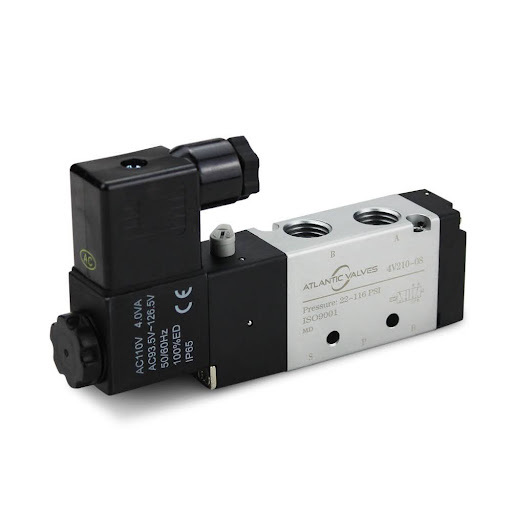
In most industrial and commercial contexts, yes. The term air solenoid valve is commonly used to describe a pneumatic solenoid valve, meaning an electrically actuated valve that controls compressed air.
The confusion happens when people shorten the term further and ask for a pneumatic valve. That broader phrase can also refer to manual valves, mechanically actuated valves, or air-piloted valves that do not use a solenoid coil.
For buying, specification, and troubleshooting, it is better to ask for a pneumatic solenoid valve when electrical actuation is required.
What Is a Pneumatic Valve?
A pneumatic valve is any valve that controls compressed air in a pneumatic system. The term refers to the working medium, not the actuation method.
A pneumatic valve may be manually operated, mechanically shifted, air pilot-controlled, or electrically actuated. Because the definition is broad, calling something a pneumatic valve does not automatically mean it is a pneumatic solenoid valve.
This is the source of most specification confusion.
What Is a Pneumatic Solenoid Valve?
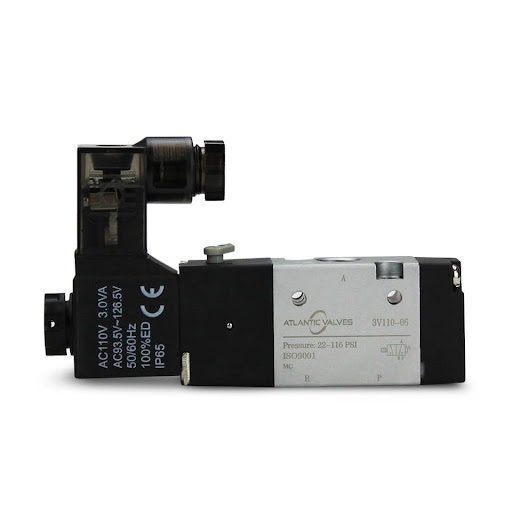
A pneumatic solenoid valve is a pneumatic valve that uses an electrical solenoid coil to shift internal airflow passages.
When voltage is applied to the pneumatic solenoid valve:
- The coil energizes.
- A magnetic field moves the plunger or spool.
- Internal air ports change state.
When power is removed, many pneumatic solenoid valves return to their default position, but the exact behavior depends on whether the valve is spring return, single solenoid, or double solenoid.
- Medium: compressed air
- Actuation: electrical
Pneumatic Valve vs Pneumatic Solenoid Valve Comparison
| Feature | Pneumatic Valve | Pneumatic Solenoid Valve |
|---|---|---|
| Controls Compressed Air | Yes | Yes |
| Electrically Actuated | Not always | Yes |
| PLC Compatible | Sometimes | Yes |
| Automation Level | Depends on the type | High |
| Requires Wiring | Not necessarily | Yes |
| Remote Control | Limited | Yes |
How a Pneumatic Solenoid Valve Works
A pneumatic solenoid valve contains a coil assembly and an internal spool or plunger mechanism. When energized, the coil creates a magnetic force that shifts the internal components, redirecting compressed air between ports.
- Supply air to an actuator
- Exhaust air from a cylinder
- Reverse airflow direction
| BROWSE PNEUMATIC SOLENOID VALVES |
3 Way vs 5 Port Pneumatic Solenoid Valve
Port configuration determines cylinder behavior. Choosing the wrong pneumatic solenoid valve configuration will prevent proper actuator operation.
Functional Comparison
| Specification | 3 Way Pneumatic Solenoid Valve | 5 Port Pneumatic Solenoid Valve |
|---|---|---|
| Cylinder Type | Single acting | Double acting |
| Control | On/Off | Extend/Retract |
| Automation | Basic | Full control |
Electrical Considerations
Pneumatic solenoid valves are available in several common coil voltages. Matching the coil to your control system is critical for reliable operation and safe wiring.
- 12V DC
- 24V DC
- 110V AC
- 220V AC
Application Selection Guide
| Application | Recommended Valve |
|---|---|
| Manual air control | Pneumatic valve |
| PLC controlled cylinder | Pneumatic solenoid valve |
| Single-acting actuator | 3-way pneumatic solenoid valve |
| Double-acting actuator | 5-port pneumatic solenoid valve |
| Remote automation | Pneumatic solenoid valve |
Recommended Valve Based on Your Application
If you are still deciding between options, use this quick guide based on common pneumatic use cases:
- 3 Way Pneumatic Solenoid Valve: Best for single-acting cylinders, basic on-off air control, and air blow-off systems.
- 5 Port Pneumatic Solenoid Valve: Best for double-acting cylinders and directional extend-retract control.
- Standard Pneumatic Valve: Best for manually operated systems or applications that do not require electrical actuation.
- Pneumatic Solenoid Valve: Best for PLC-controlled, automated, or remotely operated pneumatic systems.
Quick rule: If your system uses wiring, a PLC, or a control signal, you likely need a pneumatic solenoid valve rather than a general pneumatic valve.
Final Takeaway
A pneumatic valve is a broad term for any valve that controls compressed air. A pneumatic solenoid valve is a specific type of pneumatic valve that uses an electrical coil for actuation. That difference matters when you are selecting components for automation, cylinder control, and remote switching.
If you only need manual or pilot-based control, a general pneumatic valve may be enough. If you need electrical control, faster integration with control panels, or repeatable automation, a pneumatic solenoid valve is the right direction.
For most buyers comparing pneumatic valve vs pneumatic solenoid valve, the real decision comes down to one question: do you need electrical actuation? If the answer is yes, shop pneumatic solenoid valves by port size, voltage, and configuration.
Related Products:
- 1/4" 5 Port 4 Way 2 Position Pneumatic Solenoid Valve - Best for double-acting cylinders and directional air control applications.
- 1/8" 3 Way 2 Position Pneumatic Solenoid Valve - Good fit for single-acting cylinders and simple on-off compressed air control.
Need help with selecting the correct valve the first time?
Give us a call at 800-983-8230 to speak to a valve expert or email us at sales@electricsolenoidvalves.com.