
Posted by Electric Solenoid Valves on Jul 24th 2026
Solenoid Valve Chemical Compatibility Guide
Solenoid Valve Chemical Compatibility Guide: Choosing the Right Material for Your Application
Selecting the correct solenoid valve material is essential when controlling chemicals, corrosive fluids, or other demanding media. The compatibility between the valve body, seals, and the fluid being controlled can directly impact valve performance, reliability, and service life.
Choosing an incompatible material may result in corrosion, swelling, degradation, leaks, or premature component failure. This is why engineers, OEMs, maintenance professionals, and system designers rely on chemical compatibility data when selecting valves and fluid control components.
To simplify the selection process, ElectricSolenoidValves.com provides a chemical compatibility database that allows users to compare more than 600 chemicals with over 40 different materials, including plastics, silicone, natural rubber, PTFE/Teflon, elastomers, and various metals.
Use this guide to better understand chemical compatibility, how to use the database, and how material selection impacts solenoid valve performance.
What Is Chemical Compatibility?
Chemical compatibility describes how well a material can withstand exposure to a specific chemical without experiencing significant changes in performance or physical properties.
Different chemicals can react differently with materials depending on factors such as:
- Chemical composition
- Temperature
- Pressure
- Concentration
- Exposure time
- Operating environment
A material that performs well in one application may not be suitable for another. Proper material selection helps ensure reliable operation and reduces the risk of valve failure.
Why Chemical Compatibility Matters for Solenoid Valves
Solenoid valves are used to control the flow of liquids and gases across many industries. When the controlled media contains chemicals or aggressive fluids, selecting the correct valve materials becomes especially important.
The valve body, seals, diaphragm, and internal components must all be compatible with the media being controlled.
Incorrect material selection can lead to:
- Corrosion
- Seal deterioration
- Swelling or softening
- Loss of mechanical strength
- Reduced valve lifespan
- Improper sealing
For this reason, chemical compatibility should always be considered alongside other valve selection factors such as pressure rating, temperature range, flow requirements, and electrical specifications.
ElectricSolenoidValves.com Chemical Compatibility Database
The ElectricSolenoidValves.com chemical compatibility database was developed to help users quickly evaluate material compatibility for fluid control applications.
The tool allows users to compare:
- More than 600 chemicals
- More than 40 materials
- Plastics
- Metals
- Elastomers
- PTFE/Teflon
- Silicone
- Natural rubber
While the database is useful for selecting solenoid valve materials, it can also help evaluate materials used in other fluid-handling applications where chemical resistance is important.
How to Use the Chemical Compatibility Chart
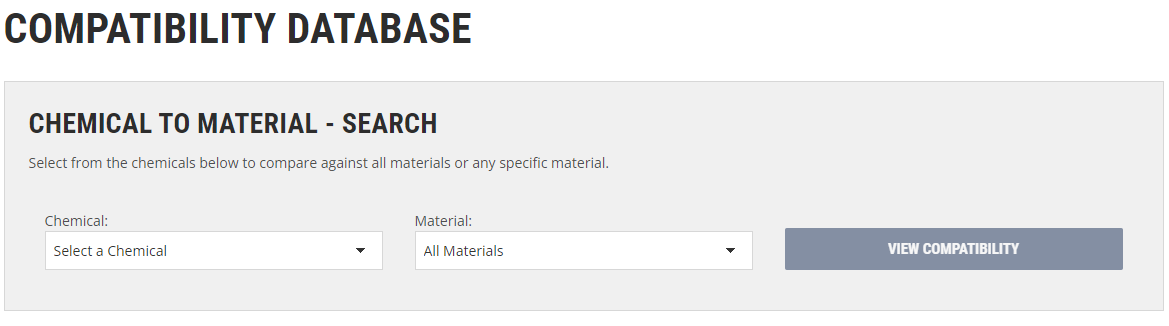
To use the chemical compatibility database:
- Navigate to the ElectricSolenoidValves.com chemical compatibility database.
- Select the chemical you are working with.
- Select the material you want to evaluate.
- Click the “View Compatibility” button.
The database will display the compatibility rating between the selected chemical and material based on the available compatibility matrix.
Users can also select only a chemical or only a material to view related compatibility information.
This makes it easier to compare different materials when selecting components for a specific application.
Understanding Chemical Compatibility Ratings
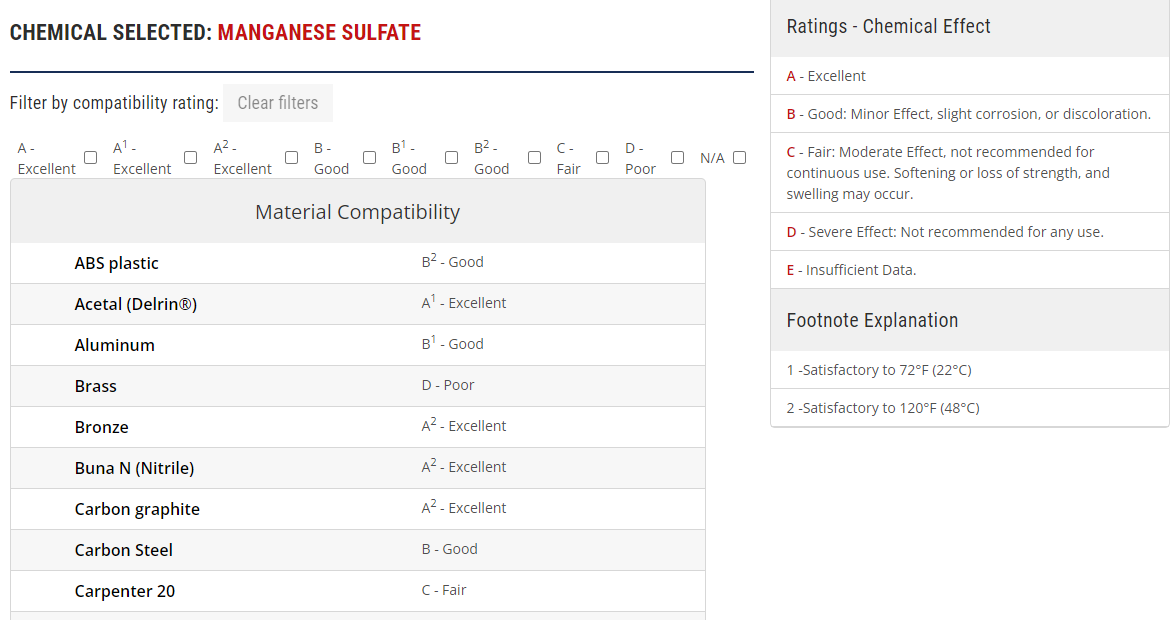
The database uses a rating system to help users quickly understand how materials perform when exposed to specific chemicals.
A — Excellent
The material has excellent compatibility with the selected chemical.
B — Good
Minor effects may occur, such as slight corrosion or discoloration.
C — Fair
Moderate effects may occur. Continuous use is not recommended. Softening, swelling, or loss of strength may occur.
D — Severe Effect
The material is not recommended for use with the selected chemical.
E — Insufficient Data
Not enough compatibility information is available.
Common Solenoid Valve Materials and Chemical Compatibility
Selecting the correct valve material depends on the application requirements and the media being controlled.
Brass Solenoid Valves
Brass is commonly used in many general-purpose valve applications. However, compatibility should always be reviewed when controlling chemicals or corrosive fluids.
When selecting a brass valve, consider:
- Chemical exposure
- Operating environment
- Temperature requirements
- Long-term application conditions
Stainless Steel Solenoid Valves
Stainless steel is commonly selected for applications where increased corrosion resistance and durability are required.
Stainless steel valves may be considered for applications involving:
- More demanding environments
- Industrial fluid systems
- Applications requiring durable materials
Material compatibility should still be verified before use with specific chemicals.
PTFE/Teflon Materials
PTFE is widely used in applications where chemical resistance is important.
PTFE materials are often considered when working with:
- Corrosive chemicals
- Aggressive media
- Challenging fluid environments
Compatibility should always be confirmed based on the specific chemical and operating conditions.
Plastic Valve Materials
Plastic materials may be suitable for certain chemical applications where metal compatibility is a concern.
Factors to consider include:
- Chemical exposure
- Temperature limits
- Pressure requirements
- Application environment
Seal Material Compatibility
Valve body material is only one part of chemical compatibility. Seal materials are equally important because seals directly contact the controlled media.
Common seal materials include:
NBR Seals
NBR is commonly used in many general-purpose applications. Compatibility depends on the specific chemical and operating conditions.
Learn more: NBR Seals Applications in Low Pressure Solenoid Valves
Viton/FKM Seals
Viton/FKM materials are often considered for applications requiring different chemical and temperature resistance characteristics.
Learn more: NBR vs. Viton Seals
PTFE Seals
PTFE seals are commonly selected for applications where chemical resistance is a primary consideration.
Learn more: PTFE vs. Teflon
How to Choose the Right Solenoid Valve Material
When selecting a solenoid valve for chemical applications, consider the following:
1. Identify the Controlled Chemical
Determine exactly what fluid or chemical will pass through the valve.
2. Check Material Compatibility
Verify compatibility between:
-
- Valve body material
- Seal material
- Internal components
- Controlled media
3. Consider Temperature Requirements
Temperature can affect material performance and chemical resistance.
4. Evaluate Pressure Requirements
Ensure the selected valve can operate correctly within the system pressure range.
5. Consider the Operating Environment
Environmental factors such as moisture, outdoor exposure, and surrounding chemicals can affect valve performance.
Applications Where Chemical Compatibility Matters
Chemical compatibility is important in many industries and applications, including:
- Industrial automation
- Water treatment
- Chemical processing
- Manufacturing equipment
- Laboratory systems
- OEM equipment
- Fluid handling systems
Selecting the correct materials helps improve reliability and supports proper system operation.
Frequently Asked Questions
What is a chemical compatibility chart?
A chemical compatibility chart shows how different materials perform when exposed to specific chemicals or fluids.
How do I choose a solenoid valve for chemical applications?
Select a valve based on the chemical being controlled, valve materials, seal compatibility, temperature, pressure, and application requirements.
What materials are commonly used for chemical-resistant solenoid valves?
Common materials include stainless steel, PTFE, certain plastics, and compatible elastomers. The correct choice depends on the chemical and operating conditions.
Is PTFE compatible with chemicals?
PTFE is commonly selected for applications requiring chemical resistance, but compatibility should always be verified for the specific chemical being used.
Why is seal compatibility important in solenoid valves?
Seals directly contact the controlled media, making their compatibility critical for maintaining proper sealing and reliable valve operation.
Got Questions? Talk to a Valve Expert Today.
Choosing the right valve shouldn't delay your build. Our New York-based technical team is ready to help with selection, troubleshooting, and custom setups.
Important Compatibility Disclaimer
The chemical compatibility database is provided as a general reference tool only. Actual compatibility may vary depending on temperature, pressure, chemical concentration, exposure time, and operating conditions.
Before installing new products or making changes to a chemical handling system, proper testing and material verification should be completed to confirm suitability and safety for the specific application.