
Posted by Electric Solenoid Valves on Jul 10th 2026
Solenoid Valve Terminology: A–Z Glossary of Terms
Solenoid Valve Terminology: An A–Z Glossary of Valve Terms
Whether you're selecting a new valve, troubleshooting a system, or learning about industrial automation, understanding solenoid valve terminology is essential. This A–Z glossary explains common valve terms, components, operating principles, and technical specifications in clear, practical language to help engineers, OEMs, maintenance professionals, and buyers make informed decisions.
Let’s start with the obvious:
Solenoid Valves (SV): Electromechanically operated valves that control the flow of liquids or gases by using a solenoid coil, which is energized to open or close the valve.
Solenoid Valve Basics
Actuating
The process of changing a valve from one operating position to another, such as opening or closing.
Actuator
A mechanism that creates movement to open, close, or regulate a valve.
Armature
A movable ferromagnetic component that is attracted by the magnetic field generated by the solenoid coil, translating electrical energy into mechanical motion.
Armature Tube
The plunger and spring are housed inside the armature tube. This hollow tube is responsible for guiding the armature in the right direction to open or close the valve.
Core Tube
Also called a guide or stem tube, it encloses the core and coil assembly, houses the plunger, and helps direct magnetic force within the solenoid assembly.
Electromagnetic Field
The magnetic field is produced when an electric current flows through a solenoid.
Exhaust Port
A valve port used to vent media or release pressure from a system.
Flow Path
The route the media follows as it travels through the valve body.
Fluid Control
The regulation of liquid or gas flow using valves and related control devices.
Hysteresis
The delayed or varying response of the valve state (open/close or flow rate) relative to the control signal.
Inlet Port
The connection point where media enters the valve.
Internal Components
The moving, sealing, and support parts located inside the valve body.
Magnetic Core
The ferromagnetic component positioned inside the solenoid coil that concentrates and strengthens the magnetic field when the coil is energized. In many valve designs, the movable portion of the core is the plunger (or armature) that opens and closes the flow path.
Magnetic Force
The force generated by an energized coil that moves the armature or plunger.
Media
The liquid, gas, steam, or other substance flowing through a valve.
Outlet Port
The connection point where media exits the valve.
Plunger
The movable component inside a solenoid valve that opens or closes the flow path.
Port
Also called a bore, is the opening in the valve body where media enters, exits, or is redirected.
Response Time
The time required for a valve to fully open or close after being energized.
Solenoid
An electromagnetic device that converts electrical energy into mechanical motion.
Solenoid Valve
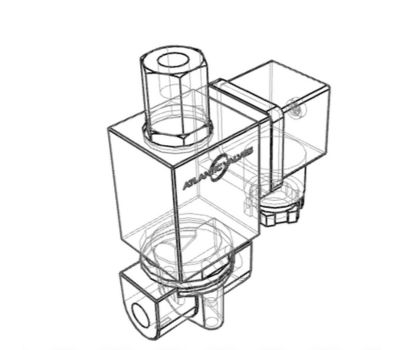
An electromechanically operated valve that controls the flow of liquids or gases using a solenoid coil.
Spring Return
A spring mechanism that returns the valve to its normal position when power is removed.
Valve Body
The primary component of a valve that functions as the housing for internal valve components.
Valve Position
The operating state of a valve, such as open, closed, or energized.
Valve Seat
Internal component that has a sealing surface against which the plunger or diaphragm closes to stop flow.
Solenoid Valve Types
Air Valve
A valve designed specifically for controlling compressed air.
Assisted Lift Valve
A valve that is engineered to function effectively from zero pressure or even in vacuum conditions. It combines electromagnetic force and system pressure to open or close.
Brass Solenoid Valve
A brass valve commonly used for water, air, and general-purpose applications.
Check Valve
A check valve, also known as a one-way or non-return valve, automatically allows fluid or gas to flow in one direction while preventing backflow.
Direct Acting Valve
A valve in which the solenoid directly opens or closes the orifice without relying on system pressure.
Gas Valve
A valve designed to control gaseous media such as natural gas or propane.
Indirect Acting Valve
A valve that uses system pressure to assist operation, requiring a minimum differential pressure to operate. It is often referred to as a pilot-operated valve.
Media-Separated Valve
A valve design that isolates process media from the electrical and magnetic components.
Normally Closed (NC)
A valve that remains closed when electrical power is removed and opens when energized.
Normally Open (NO)
A valve that remains open when electrical power is removed and closes when energized.
Pilot Operated Valve
A valve that uses media pressure to assist opening and closing, allowing larger flow capacities.
Plastic Solenoid Valve
A valve manufactured from engineered plastic materials for corrosion resistance and lightweight construction.
Semi-Direct Acting Valve
A valve design that combines direct solenoid force with pressure-assisted operation.
Servo-Assisted Valve
Another term for a pilot-operated valve that uses system pressure to amplify opening force.
Stainless Steel Solenoid Valve
A corrosion-resistant valve suitable for harsh environments and corrosive media.
Steam Solenoid Valve
A valve specifically designed to withstand elevated temperatures and pressures associated with steam applications.
3 Way Solenoid Valve
A valve with three ports used to divert, mix, or exhaust media.
2 Way Solenoid Valve
A valve with one inlet and one outlet used to start or stop flow.
4 Way Solenoid Valve
A valve commonly used to control double-acting pneumatic actuators.
Zero Differential Valve
A valve capable of operating when inlet and outlet pressures are equal.
Zero Pressure Valve
A valve designed to function without requiring minimum pressure differential.
Valve Flow, Sizing & Performance
Actual Flow Rate
The measured volume of media moving through a valve under real operating conditions.
Application Pressure
The normal operating pressure within a specific system.
Burst Pressure
The maximum pressure a component can withstand before it physically ruptures or breaks apart.
Critical Flow
A condition where an increasing pressure differential no longer increases flow rate.
Cv
A flow coefficient used in U.S. units to indicate the flow capacity of a valve.
Differential Pressure
The difference in pressure between the inlet and outlet sides of a valve.
Flow Capacity
The maximum volume of media a valve can pass without causing excessive pressure loss or operational inefficiencies.
Flow Coefficient
A standardized measure of a valve or device’s capacity to allow fluid flow.
Flow Rate
The volume of media passing through a valve over a given period.
GPM
Gallons per minute, a common flow rate measurement used in North America.
Kv
A metric flow coefficient used to measure valve flow capacity.
LPM
Liters per minute, a metric unit used to measure flow rate.
Maximum Operating Pressure
The highest pressure a valve can be safely operated under normal conditions.
Minimum Operating Pressure
The lowest pressure required for proper valve operation, particularly in pilot-operated valves.
Orifice
The opening inside a valve that controls the flow of media.
Orifice Diameter
The measured size of the valve opening through which media flows.
Oversized Valve
A valve selected with greater flow capacity than the application requires.
Pressure Differential
The difference between inlet pressure and outlet pressure across a valve.
Pressure Drop
The reduction in pressure that occurs as media flows through a valve.
Pressure Rating
The maximum pressure limit specified by the manufacturer.
Proof Pressure
The highest pressure a valve can withstand without permanent deformation.
PSI
Pounds per square inch, a common pressure measurement unit.
Atmospheric Pressure
The pressure exerted by the Earth's atmosphere. Atmospheric pressure serves as a reference point for many pressure measurements.
Bar
A metric unit of pressure commonly used in industrial applications. One bar is approximately equal to 14.5 PSI.
Kilopascal (kPa)
A metric pressure unit frequently used in engineering specifications. One kilopascal equals 1,000 pascals.
Operating Pressure
The pressure range within which a valve is intended to function safely and reliably.
Pressure
The force exerted by a liquid or gas against a surface, usually measured in PSI, bar, or kPa.
Undersized Valve
A valve that restricts flow because its capacity is too small for the application.
Velocity
The speed at which media travels through piping and valve passages.
Water Hammer
A pressure surge caused by the sudden stopping or redirection of fluid flow.
Electrical & Coil Terminology
AC Coil
A coil designed to operate using alternating current power.
Ampere (Amp)
A unit used to measure electrical current flow.
Coil
A wire-wound component that generates a magnetic field when electrical current is applied.
Coil Burnout
Permanent damage to a coil caused by excessive heat or electrical overload.
Coil Housing
The protective enclosure surrounding a solenoid coil.
Coil Insulation
The material that electrically isolates coil windings and prevents short circuits.
Coil Resistance
The opposition to electrical current flow within the coil, measured in ohms.
Coil Temperature Rise
The increase in coil temperature that occurs during normal operation.
Continuous Duty Coil
A coil designed to remain energized continuously without overheating.
Current Draw
The amount of electrical current required during valve operation.
DC Voltage
Direct current electrical power supplied to a solenoid valve coil.
DIN Connector
A standardized electrical connector commonly used on industrial solenoid valves.
Duty Cycle
The percentage of time the valve can remain energized compared to its total operational time.
Electrical Rating
The specified voltage and current limits for safe operation.
Impedance
The total opposition to alternating current flow in a coil.
Inductance
The electrical property that resists changes in current flow.
Inrush Current
A temporary surge of current that occurs when an AC coil is first energized.
Lead Wire
An electrical conductor used to connect power to a solenoid coil.
Power Consumption
The total electrical energy used by a valve while energized.
Reactance
The opposition to AC current caused by inductance.
Solenoid Coil
The electromagnetic portion of a solenoid valve responsible for moving the plunger.
Turns Count
The number of wire windings used to create a solenoid coil.
Voltage
The electrical potential required to energize a solenoid coil.
Voltage Drop
A reduction in supplied voltage that can affect valve performance.
Wattage
The amount of electrical power consumed by a solenoid coil.
Frequency
The number of alternating current cycles per second, measured in hertz (Hz). Common power frequencies are 50 Hz and 60 Hz.
Hertz (Hz)
The unit used to measure electrical frequency. Solenoid coils are often designed for operation at either 50 Hz or 60 Hz.
Valve Materials & Construction
Aluminum
A lightweight metal offering corrosion resistance and strength.
Body Material
The material used to manufacture the valve housing.
Bonnet
The valve component that encloses and supports internal moving parts.
Brass
A durable copper-zinc alloy commonly used in general-purpose valve applications.
Chemical Compatibility
The ability of valve materials to resist chemical attack from process media.
Corrosion Resistance
The ability of a material to withstand deterioration caused by environmental exposure.
Diaphragm
A flexible sealing element used to control flow in many pilot-operated valves.
Elastomer
A flexible polymer material commonly used for seals and diaphragms.
Ferrous Metal
A metal containing iron that can respond to magnetic fields.
Food Grade Material
A material suitable for food and beverage applications.
Internal Components
The moving and sealing parts that are located within the valve body.
Material Compatibility
The suitability of a material for use with a specific liquid or gas.
Nylon
An engineered plastic material offering strength and chemical resistance.
PVC
A lightweight thermoplastic material commonly used in water applications.
Stainless Steel
A corrosion-resistant alloy used in demanding industrial environments.
Temperature Resistance
A material’s ability to perform under elevated or reduced temperatures.
UPVC
An unplasticized form of PVC that provides increased rigidity and durability.
Valve Stem
A component that transfers movement between the actuator and sealing element.
Wetted Materials
All components that come into direct contact with the flowing media.
Temperature Rating
The approved operating temperature range for a valve, coil, seal, or other component.
Seal Materials & Elastomers
Buna-N
Another name for NBR sealing material.
Chemical Resistance
The ability of a seal material to withstand exposure to chemicals.
Compression Set
Permanent deformation of a seal after extended compression.
Elastomer Seal
A flexible sealing component made from rubber-like materials.
EPDM
A synthetic rubber known for excellent resistance to water and weathering.
FKM
The ASTM designation commonly associated with Viton materials.
Hardness
A measurement of a seal material's resistance to indentation or deformation.
Leak Path
A route through which media can escape due to inadequate sealing.
Material Compatibility
The suitability of a seal material for a specific application.
NBR
A nitrile rubber seal material commonly used for water, air, and oil applications.
PTFE
A fluoropolymer known for exceptional chemical resistance and low friction.
Seal
A component that prevents leakage between mating surfaces.
Seal Material
The elastomer or polymer used to create a leak-resistant seal.
Seal Swelling
Expansion of a seal caused by exposure to incompatible media.
Viton (FKM)
A fluoroelastomer offering superior resistance to chemicals and elevated temperatures.
Pipe Threads & Valve Connections
Adapter Fitting
A fitting used to connect different thread types or sizes.
BSP
British Standard Pipe thread commonly used outside North America.
BSPP
British Standard Pipe Parallel thread requiring a sealing washer or gasket.
BSPT
British Standard Pipe Taper thread designed to seal through thread interference.
Connection Size
The nominal size of a threaded or port connection.
Female NPT
An internally threaded NPT connection.
Female Thread
An internal thread designed to accept a male fitting.
Hand-Tight Engagement
The amount of thread engagement achieved without tools.
Male NPT
An externally threaded NPT connection.
Male Thread
An external thread designed to engage a female fitting.
NPS
National Pipe Straight thread used primarily for mechanical connections.
NPT
National Pipe Taper thread commonly used in North America.
NPTF
A Dryseal version of NPT designed to minimize leakage without sealants.
Pipe Dope
A paste-type thread sealant used on pipe connections.
Pipe Thread
A threaded connection used to join piping components.
Port Size
The size of a valve inlet or outlet connection.
PTFE Tape
A thread-sealing tape applied to threaded fittings.
Tapered Thread
A thread that gradually decreases in diameter to create a mechanical seal.
Thread Angle
The angle formed between opposing thread flanks.
Thread Engagement
The amount of contact between mating threads.
Thread Interference
The sealing pressure generated between tapered threads.
Thread Pitch
The distance between adjacent thread peaks.
Thread Sealant
A compound used to prevent leakage in threaded connections.
TPI
Threads per inch, a measurement of thread density.
Union Connection
A fitting that allows piping components to be disconnected easily.
Wrench-Tight Engagement
Additional thread engagement achieved using tools.
Valve Certifications & Compliance
CE Marking
A conformity mark indicating compliance with applicable European requirements.
Compliance
The act of meeting specified regulations, standards, or requirements.
Drinking Water Certification
Verification that materials are safe for contact with drinking water.
Ingress Protection Rating (IP)
A rating indicating resistance to dust and water intrusion.
NEMA Rating
A classification system for electrical enclosure protection.
NSF/ANSI 61
A certification standard for materials used in potable water applications.
Product Certification
Independent confirmation that a product meets defined criteria.
Recognized Component
A component approved for use within a larger certified assembly.
RoHS
A directive restricting the use of certain hazardous substances in electrical equipment.
Safety Standard
A documented requirement intended to improve safety and reliability.
UL Certification
Third-party verification that a product meets applicable safety standards.
UL Listed
A certification indicating a complete product has been evaluated and approved.
UL Recognized
A certification typically applied to components used within larger systems.
Valve Applications & Industries
Agricultural Irrigation
The controlled delivery of water to crops using automated systems.
Automation System
A control system that performs operations with minimal human intervention.
Beverage Dispensing
The controlled delivery of beverages using valves and fluid systems.
Car Wash System
An automated cleaning system that controls water and chemical flow.
Chemical Dosing
The controlled injection of chemicals into a process stream.
Compressed Air Automation
Automated equipment powered by compressed air.
Compressed Air System
A network designed to generate, store, and distribute compressed air.
Fluid Handling
The movement, control, and management of liquids and gases.
HVAC
Heating, ventilation, and air conditioning systems that utilize fluid control components.
Industrial Automation
The use of automated equipment to improve manufacturing processes.
Pneumatic System
A system that uses compressed air to perform work or control processes.
Potable Water System
A system intended for distributing drinking water.
Water Treatment System
Equipment designed to filter, process, or condition water.
Troubleshooting & Maintenance
Chattering
Rapid opening and closing of a valve caused by unstable operating conditions.
Coil Burnout
Permanent failure of a solenoid coil due to overheating or electrical overload.
Debris Contamination
Foreign particles that interfere with valve performance.
Failure Mode
The specific manner in which a component ceases to function.
Internal Leakage
Refers to unintended fluid flow across the valve’s internal sealing surfaces when the valve is in the closed position.
Leak Path
An unintended route through which the media escapes.
Overheating
Excessive temperature buildup that can damage valve components.
Pressure Fluctuation
Variations in system pressure that may affect valve performance.
Sticking Plunger
A plunger that fails to move freely due to contamination or wear.
Valve Failure
Loss of proper valve operation caused by mechanical, electrical, or environmental factors.
Voltage Drop
A reduction in supply voltage that can prevent proper valve operation.
Water Hammer
A pressure surge resulting from sudden changes in fluid flow.
Check Valves & Flow Control Accessories
Backflow
The reverse movement of media through a piping system.
Check Valve
A valve that permits flow in one direction while preventing reverse flow.
Manifold
A mounting block used to organize multiple valves in a compact assembly.
Push-to-Connect Fitting
A fitting that allows tubing connections without tools.
Swing Check Valve
A check valve that uses a hinged disc to prevent backflow.
Y-Strainer
A filtration device used to remove debris from fluid systems.
Conclusion
Understanding solenoid valve terminology makes it easier to compare products, troubleshoot systems, and select the right valve for your application. Whether you're a DIY installer, maintenance technician, engineer, OEM, or purchasing professional, knowing the difference between terms such as normally closed, pilot operated, Cv, orifice, NPT, and duty cycle can help you make more informed decisions.
As new technologies and industry standards evolve, we'll continue expanding this glossary with additional valve terms and definitions. If you're ready to learn more, explore our valve buying guides, technical articles, and product categories to find the right solution for your application.
Continue Learning
- NPT Thread Size Guide: How to Match Solenoid Valve Ports and Prevent Leaks
- How Does a Solenoid Work?
- Quick Troubleshooting Tips
- Best Valve Materials for Outdoor and Wet Environments: Brass vs Stainless Steel vs Plastic
- Can You Fix Your Solenoid Valve, or Is It Time for a New One?
- The Complete Guide to Connecting Solenoid Valves: Installation, Wiring, and Piping Steps
- What Is the Most Reliable Valve Type? Choosing the Right Valve for Long-Term Performance
- Choosing the Right Valve Material: Plastic vs. Brass vs. Stainless Steel